🦌
Asian Elephant
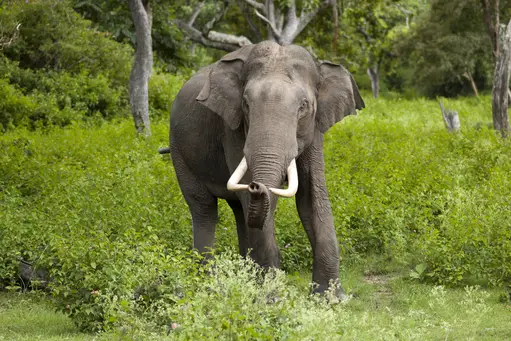
The Asian elephant, also known as the Asiatic elephant, is the only living species in the genus Elephas. It is the largest living land animal in Asia and the second largest living elephantid in the world. It is characterised by its long trunk with a single finger-like process; large tusks in males; laterally folded large ears and wrinkled grey skin that is partly depigmented on the trunk, ears or neck. Adult males average 4 t in weight and females 2.7 t. It has a large and well developed neocortex of the brain, is highly intelligent and self-aware, being able to display behaviours associated with grief, learning and greeting. Three subspecies are recognised—E. m. maximus, E. m. indicus and E. m. sumatranus.
Length
6.4 m
Weight
6.8 t
Lifespan
70 yrs
Top Speed
40 km/h
Jump
—
Loudness
—
Where Asian Elephant ranks
#2 of 274 · Heaviest Land Animals
#5 of 274 · Biggest Land Animals
#7 of 225 · Longest Lived Mammals
#10 of 435 · Heaviest Animals
#10 of 435 · Lightest Animals
#13 of 225 · Smallest Mammals
#17 of 435 · Longest Living Animals
#17 of 435 · Shortest Lived Animals
#18 of 435 · Biggest Animals
#18 of 435 · Smallest Animals
#46 of 70 · Fastest Land Animals
#48 of 76 · Fastest Mammals
#78 of 122 · Fastest Animals
#78 of 122 · Slowest Animals
🔎 Fun facts
✓
Asian elephants are the largest land mammals on the Asian continent.
✓
They have a highly developed neocortex, making them intelligent and self-aware.
✓
Female Asian elephants live in tight-knit matriarchal groups.
✓
Only some male Asian elephants have tusks; females usually do not.
✓
They can consume up to 150 kg of vegetation daily.
✓
Asian elephants have a gestation period of about 22 months, the longest of any land animal.
Character
🦫 mammal 🌍 land
📚 Description and image are reused from Asian elephant on Wikipedia, published under the CC BY-SA 4.0 license. This AnimalRanking page is likewise published under CC BY-SA 4.0.