🦌
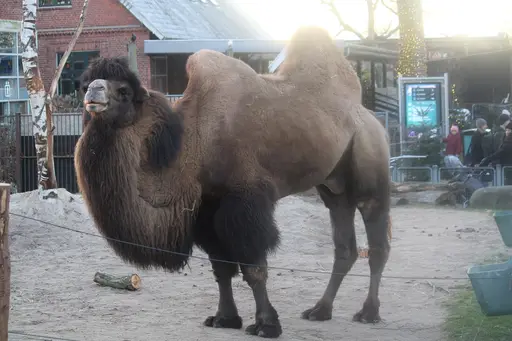
Bactrian Camel
The Bactrian camel, also known as the Mongolian camel, domestic Bactrian camel, two-humped camel or double-humped camel, is a camel native to the steppes of Central Asia. It has two humps on its back, in contrast to the single-humped dromedary. Its population of 2 million exists mainly in the domesticated form. Their name comes from the ancient historical region of Bactria.
Length
3.5 m
Weight
1 t
Lifespan
50 yrs
Top Speed
65 km/h
Jump
—
Loudness
—
Where Bactrian Camel ranks
#14 of 274 · Heaviest Land Animals
#16 of 225 · Longest Lived Mammals
#22 of 70 · Fastest Land Animals
#22 of 76 · Fastest Mammals
#28 of 435 · Heaviest Animals
#28 of 435 · Lightest Animals
#30 of 274 · Biggest Land Animals
#31 of 435 · Longest Living Animals
#31 of 435 · Shortest Lived Animals
#31 of 225 · Smallest Mammals
#46 of 122 · Fastest Animals
#46 of 122 · Slowest Animals
#63 of 435 · Biggest Animals
#63 of 435 · Smallest Animals
🔎 Fun facts
✓
Bactrian camels have two humps that store fat, which can be converted to energy and water when sustenance is scarce.
✓
They can withstand extreme temperature variations, ranging from freezing cold to blistering heat.
✓
Bactrian camels can drink up to 57 liters (15 gallons) of water in a single session when water becomes available.
✓
Their thick, woolly coats provide insulation against both cold and heat, and they shed this coat during warmer months.
✓
Bactrian camels are critically endangered in the wild, with habitat loss and hunting being major threats.
✓
They have tough mouths that allow them to eat thorny and salty plants that other animals avoid.
Character
🦫 mammal 🌍 land
📚 Description and image are reused from Bactrian camel on Wikipedia, published under the CC BY-SA 4.0 license. This AnimalRanking page is likewise published under CC BY-SA 4.0.