🐻
Giant Panda
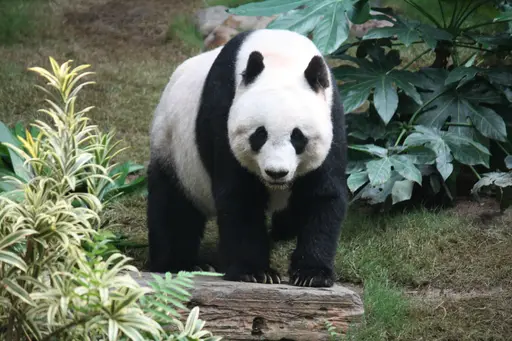
The giant panda, also known as the panda bear or simply panda, is a bear species endemic to China. It is characterised by its white coat with black patches around the eyes, ears, legs and shoulders. Its body is rotund; adult individuals weigh 100 to 115 kg and are typically 1.2 to 1.9 m long. It is sexually dimorphic, with males being typically 10–20% larger than females. A thumb is visible on its forepaw, which helps in holding bamboo in place for feeding. It has large molar teeth and expanded temporal fossae to meet its dietary requirements. It can digest starch and is mostly herbivorous with a diet consisting almost entirely of bamboo and bamboo shoots.
Length
1.8 m
Weight
150 kg
Lifespan
35 yrs
Top Speed
20 km/h
Jump
—
Loudness
—
Where Giant Panda ranks
#1 of 165 · Most Dangerous Animals
#34 of 225 · Longest Lived Mammals
#39 of 123 · Biggest Land Carnivores
#59 of 70 · Fastest Land Animals
#63 of 435 · Longest Living Animals
#63 of 435 · Shortest Lived Animals
#66 of 76 · Fastest Mammals
#82 of 274 · Heaviest Land Animals
#90 of 225 · Smallest Mammals
#95 of 274 · Biggest Land Animals
#102 of 122 · Fastest Animals
#102 of 122 · Slowest Animals
#123 of 435 · Heaviest Animals
#123 of 435 · Lightest Animals
#148 of 435 · Biggest Animals
#148 of 435 · Smallest Animals
🔎 Fun facts
✓
Despite being classified as carnivores, giant pandas have a diet that is 99% bamboo.
✓
Newborn giant pandas are extremely small, weighing about the same as a cup of tea.
✓
Giant pandas have a low metabolic rate, which is why they spend up to 14 hours a day eating bamboo.
✓
They have a keen sense of smell, which helps them locate bamboo patches and potential mates.
✓
They have a low reproductive rate, with females being fertile only once a year for a few days.
✓
Giant pandas have a thick, woolly coat that helps them stay warm in their cool mountain habitats.
✓
They are excellent climbers and swimmers, despite their large size.
Character
🦫 mammal 🌍 land 🍖 carnivore ⚠️ dangerous
📚 Description and image are reused from Giant panda on Wikipedia, published under the CC BY-SA 4.0 license. This AnimalRanking page is likewise published under CC BY-SA 4.0.