Compare two animals
Head to headPick any two animals and see how their stats stack up.
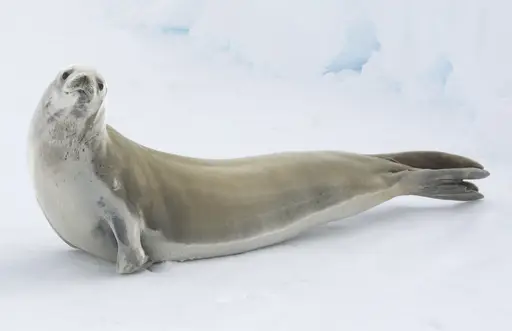
Crabeater seal
The crabeater seal, also known as the krill-eater seal, is a true seal with a circumpolar distribution around the coast of Antarctica. They are the only member of the genus Lobodon. They are medium- to large-sized, relatively slender and pale-colored, found primarily on the free-floating pack ice that extends seasonally out from the Antarctic coast, which they use as a platform for resting, mating, social aggregation and accessing their prey. They are by far the most abundant seal species in the world. While population estimates are uncertain, there are at least 7 million and possibly as many as 75 million individuals. This success of this species is due to its specialized predation on the abundant Antarctic krill of the Southern Ocean, for which it has uniquely adapted, sieve-like tooth structure. Indeed, its scientific name, translated as "lobe crab eater (carcinophaga)", refers specifically to the finely lobed teeth adapted to filtering their small crustacean prey.
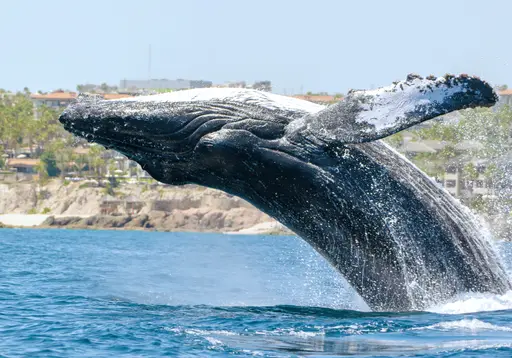
Humpback whale
The humpback whale is a species of baleen whale. It is a rorqual and is the only species in the genus Megaptera. Adults range in length from 14–17 m (46–56 ft) and weigh up to 40 metric tons. The humpback has a distinctive body shape, with long pectoral fins and tubercles on its head. It is known for breaching and other distinctive surface behaviors, making it popular with whale watchers. Males produce a complex song that typically lasts from 4 to 33 minutes.