Compare two animals
Head to headPick any two animals and see how their stats stack up.
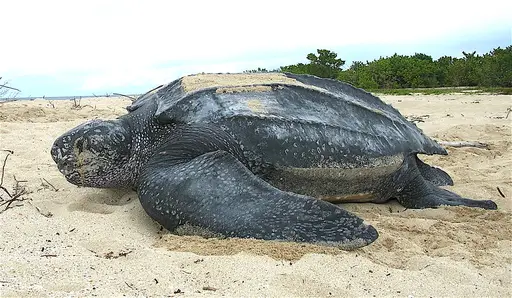
Leatherback sea turtle
The leatherback sea turtle, sometimes called the lute turtle, leathery turtle or simply the luth, is a large species of sea turtle. The largest of all living turtles and the heaviest non-crocodilian reptile, it reaches lengths of up to 2.7 metres and weights of 500 kilograms (1,100 lb). It is the only living species in the genus Dermochelys and family Dermochelyidae. It can easily be differentiated from other modern sea turtles by its lack of a bony shell; instead, its carapace is covered by oily flesh and flexible, leather-like skin, for which it is named. Leatherback turtles have a global range, although there are multiple distinct subpopulations. The species as a whole is considered vulnerable, and some of its subpopulations are critically endangered.
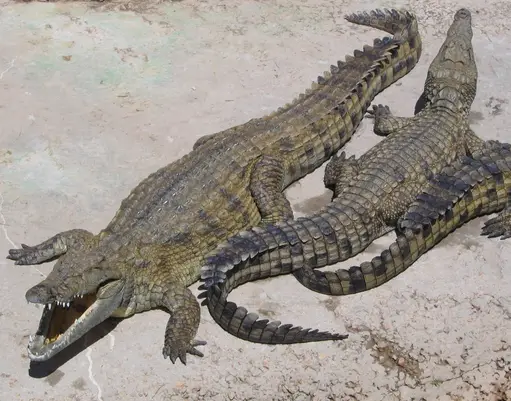
Nile Crocodile
The Nile crocodile is a large crocodilian native to freshwater habitats in Africa, where it is present in 26 countries. It is widely distributed in sub-Saharan Africa, occurring mostly in the eastern, southern, and central regions of the continent, and lives in different types of aquatic environments such as lakes, rivers, swamps and marshlands. It occasionally inhabits deltas, brackish lakes and rarely also saltwater. Its range once stretched from the Nile Delta throughout the Nile River. Lake Turkana in Kenya has one of the largest undisturbed Nile crocodile populations.